Ships Company
Start typing to discover family names.
Davis, D W
When Allotted: January 1939
Davis, Donald Phillip
Rank: Ordinary Signalman
Remarks: On loan from AFRIDI for Altmark Incident. Granted DSM
Davis, Sydney (Ivor.)( J.)
Rank: Boy Seaman
Remarks: Stationed on X gun. Went back onboard from CARNATION. (Survivor discharged to HMS Victory taking passage in HMS Rodney). Died 10 June 1994
Dawe, ‘Dickie’ H. C. S.
When Allotted: Commission 1938
Remarks: Was a member of the boarding party at the Altmark incident. At Bismarck incident. Died 1990
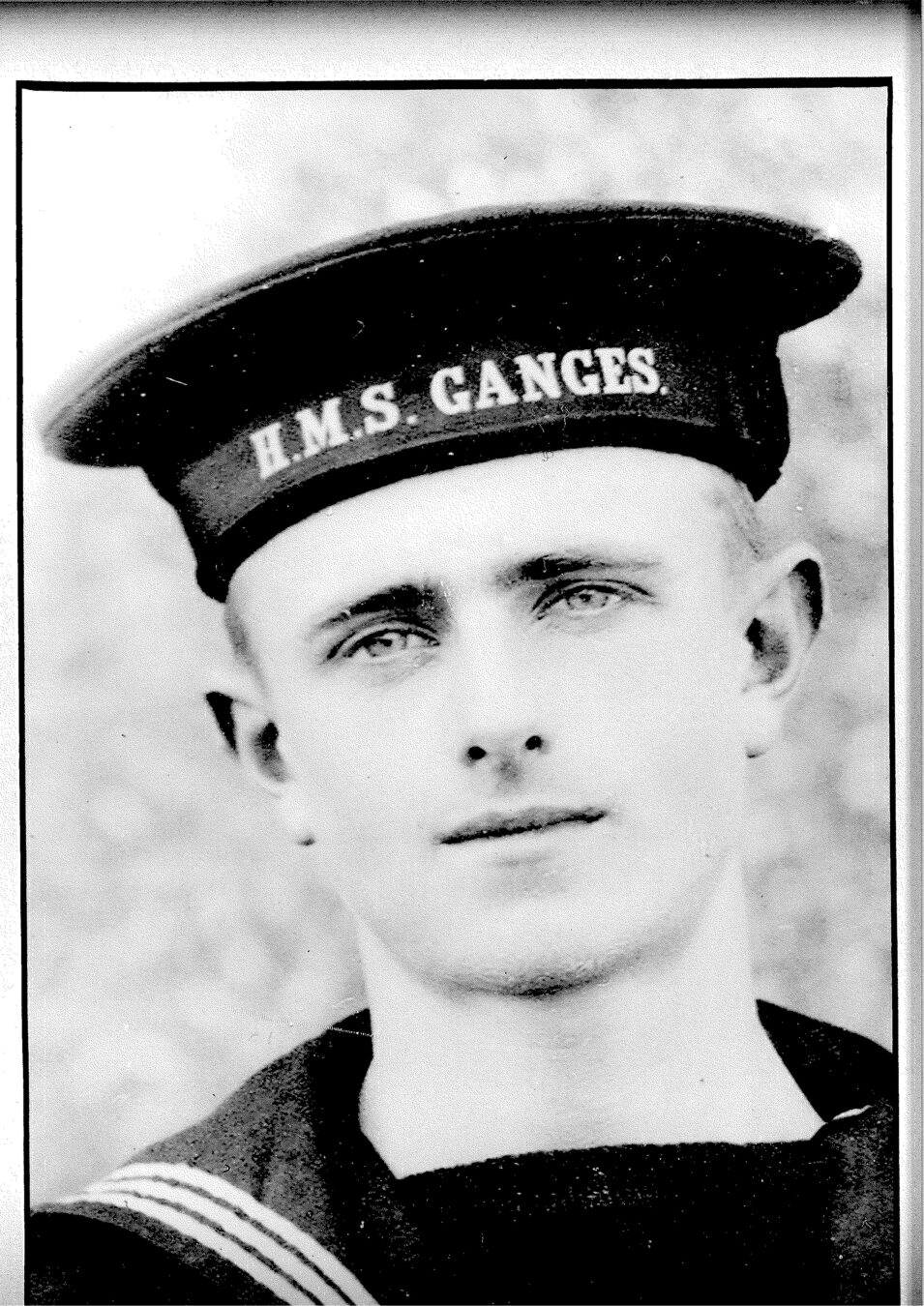
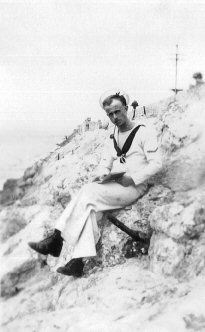
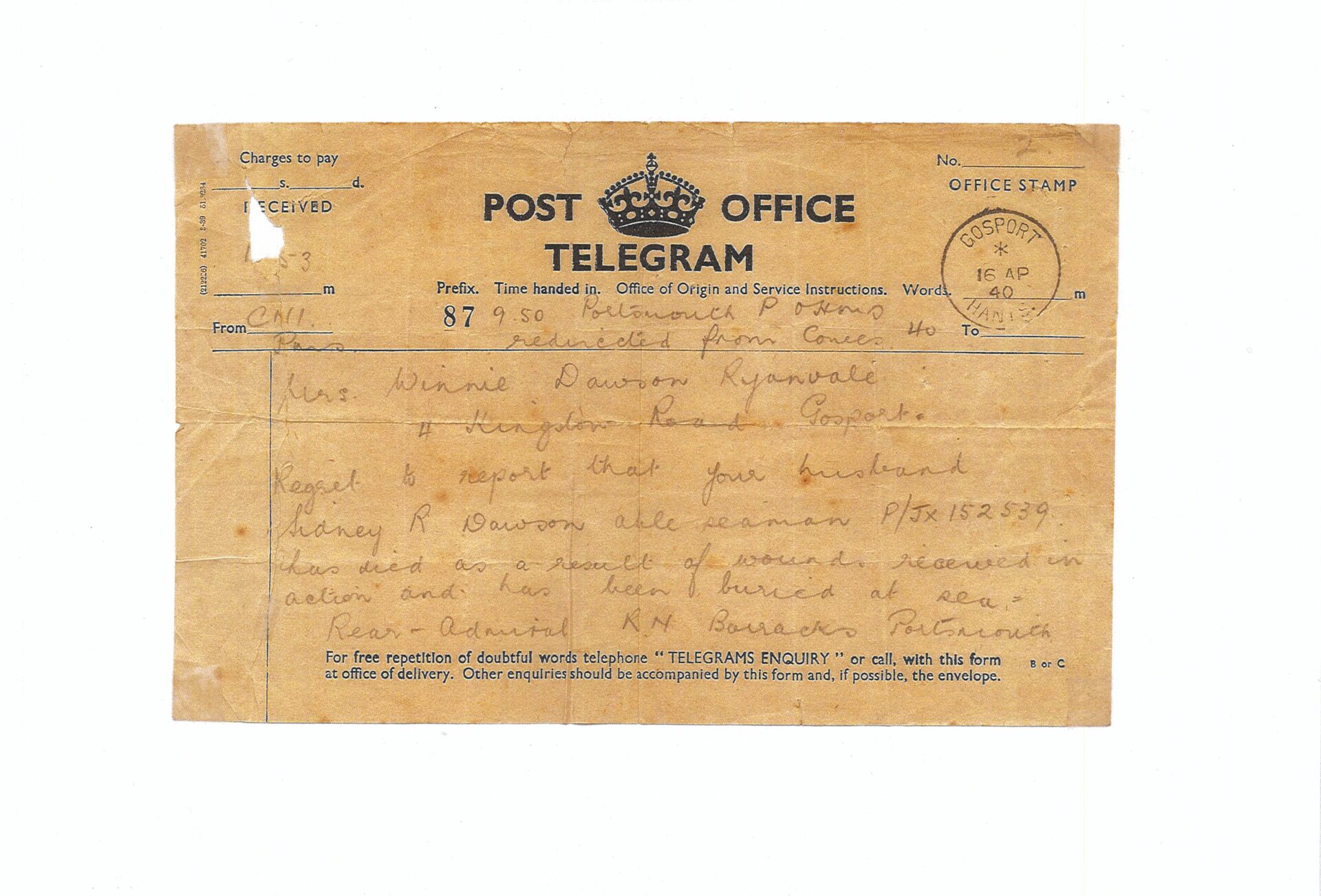
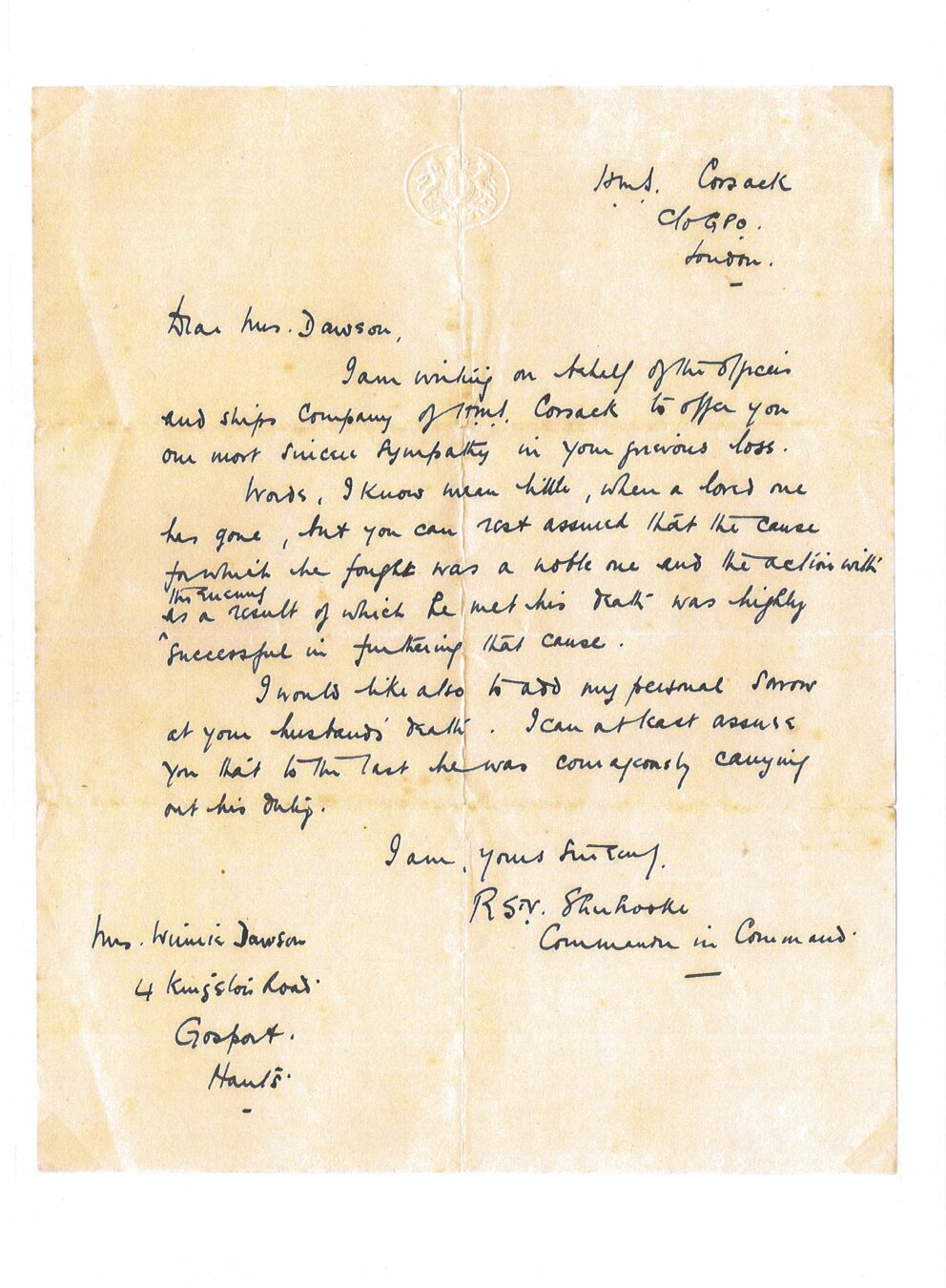
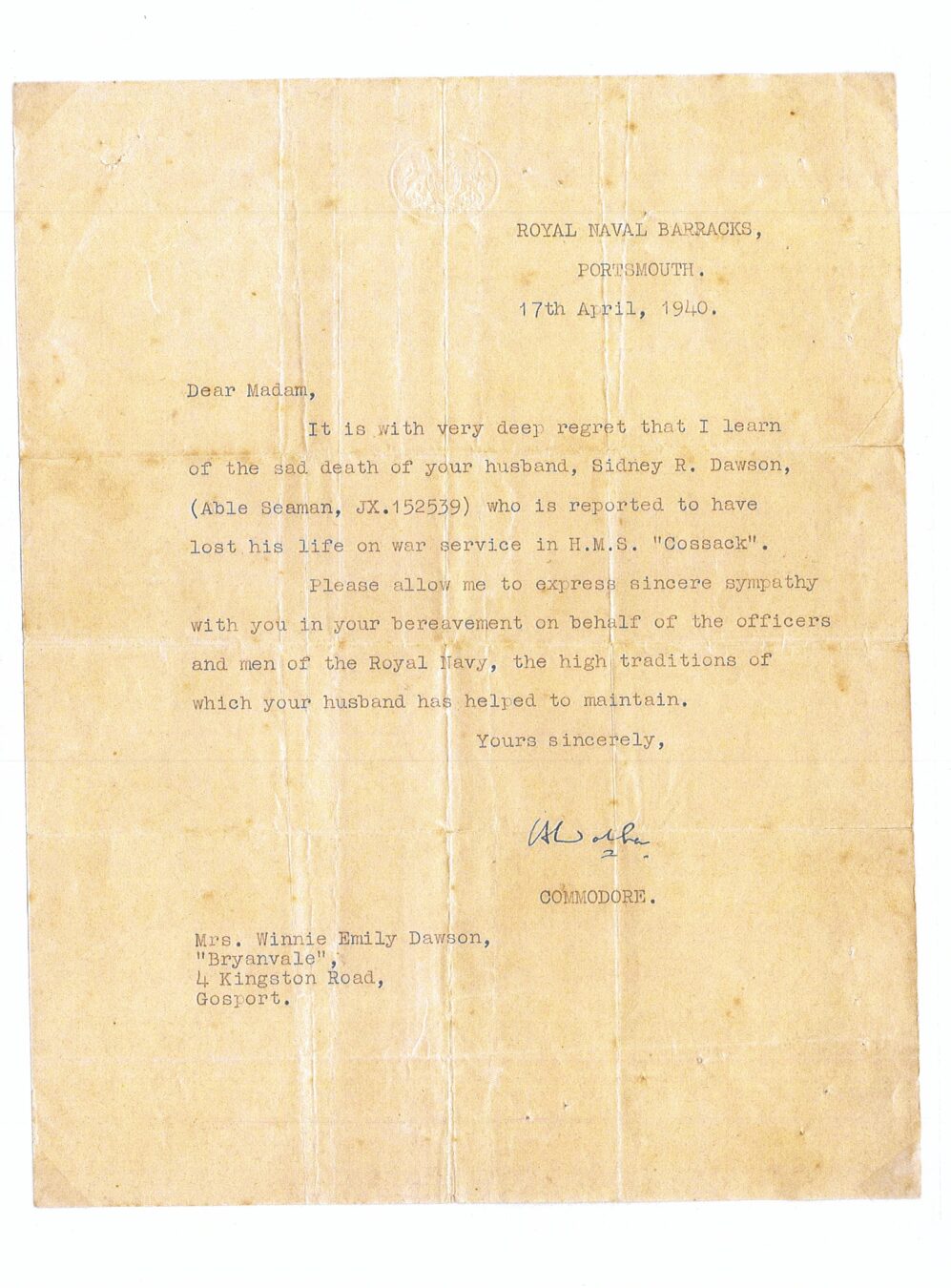
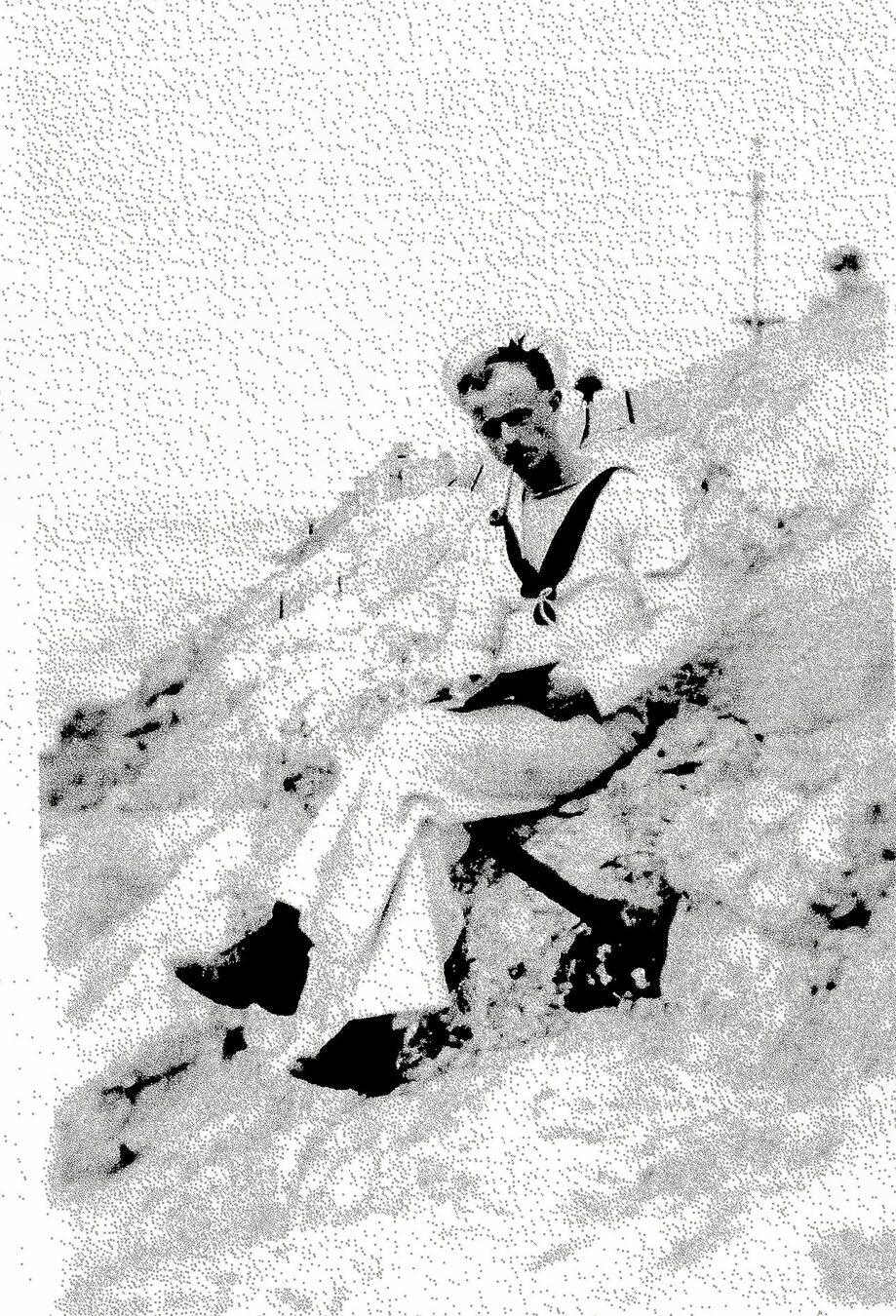
*Dawson, Sidney Reynold
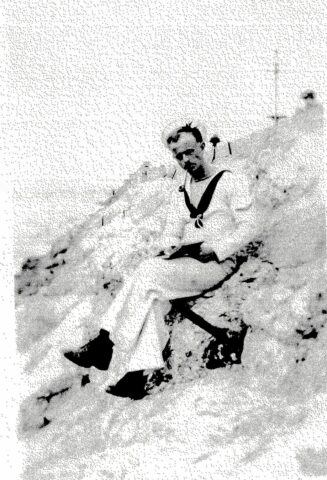
Rank: Able Seaman
Remarks: HMS Royal Oak 7 June 1939 to 14 October 1939 when she was sunk and then joined COSSACK.
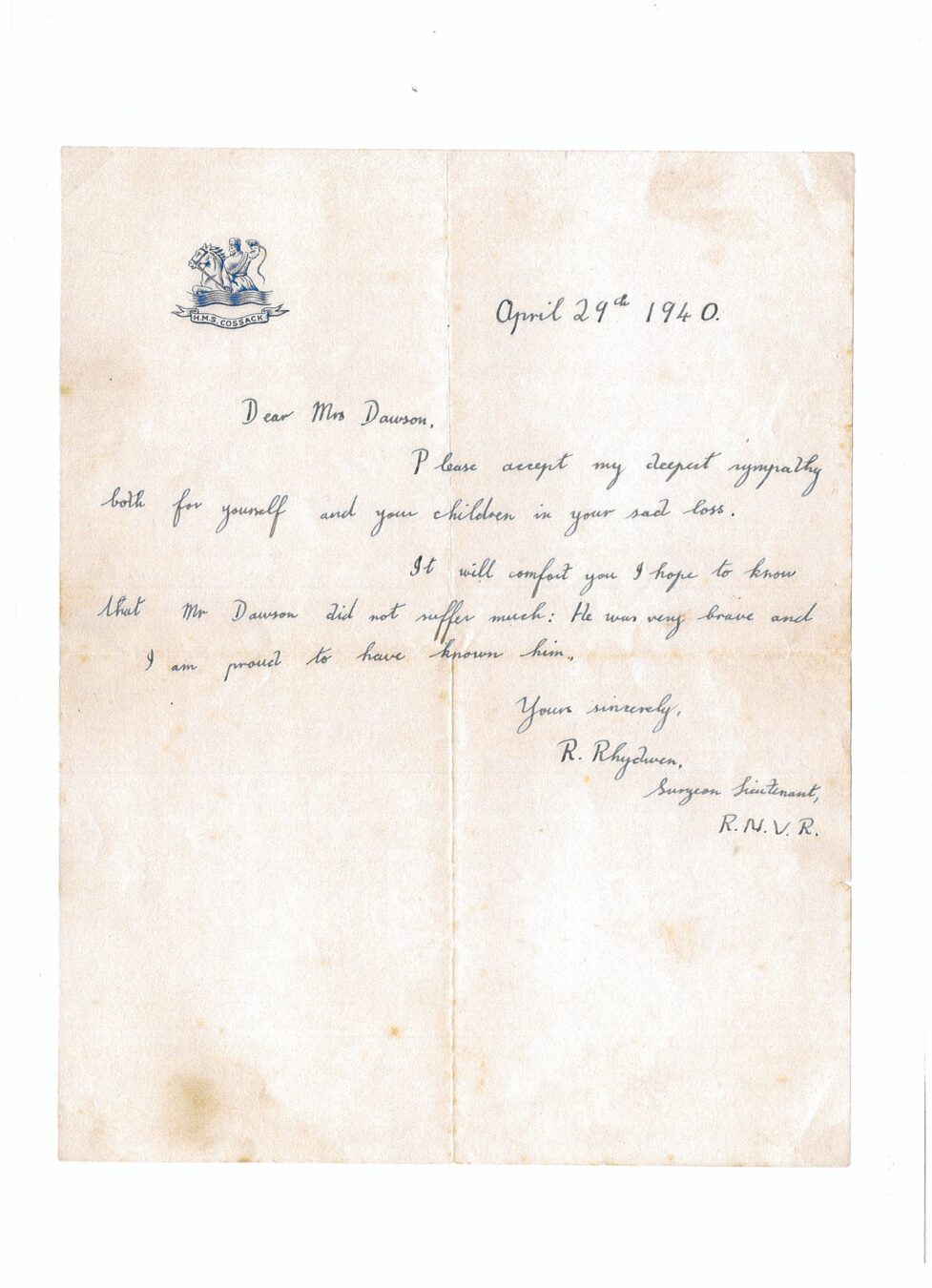
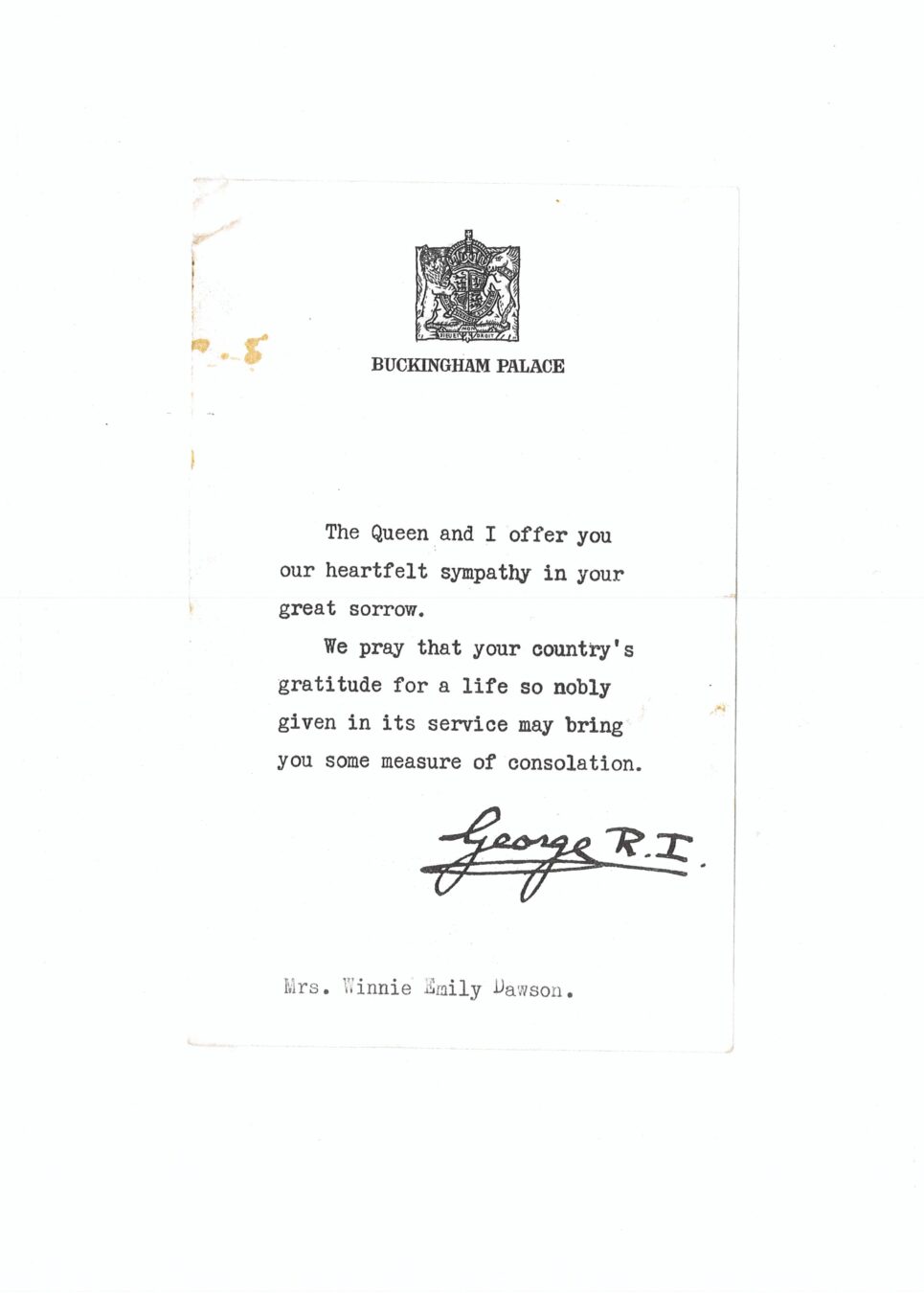
Died of shrapnel wounds to his back on 14 April 1940 during the 2nd Battle of Narvik
Age 33 and was buried at sea from HMS Warspite on the same day. (married to Winnie Emily of 4 Kingston Road, Gosport.
There were two children) Eldest son of William George and Florence A. Dawson of 49 Fellows Road, Cowes, Isle of Wight.
Born in Chiswick, London 15 June 1906 and was a messenger before joining up. Ships include. GANGES, VICTORY, IRON DUKE, QUEEN ELIZABETH, WEYMOUTH, EXCELLENT, NELSON, EGMONT, ROYAL
Documents:
Gallery:
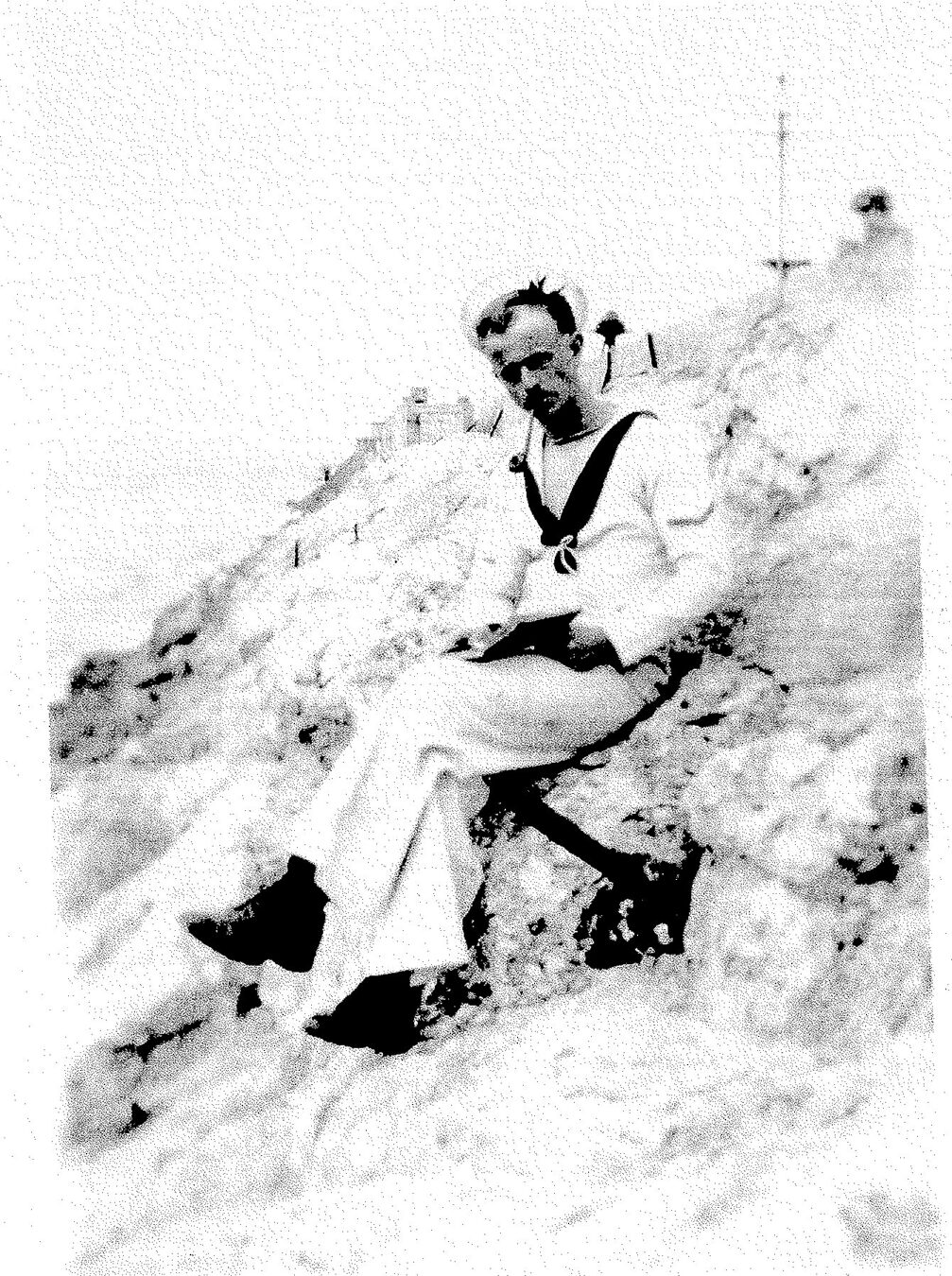
*Day, Peter A.C.
When Allotted: 14 May 1941
Remarks: Joined RN April 1938.
Appointed 14 May 1941 and joined 16 May 1941
AT Dartmouth to 23 October 1941 (At BISMARCK action).
Survivor-found at foot of bridge ladder-seriously injured 23.10.41 with multiple burns, broken leg, fractured scull and concussion.
Discharged to HMS Cormorant. Took passage back to UK in Manxman after 2 months in Gibraltar. (Made Lt Cdr) Left RN June 1967 and became a master thatcher for 15 years.
Ships include EREBUS, VINDICTIVE, CUMBERLAND, DRYAD, EXCELLENT, DOLPHIN, S/M TAKU, NIGERIA, ROMOLA, URANIA, ULLYSES, RESOURCE, SLUYS, COLLINGWOOD, PHOENIX, GLORY, DAEDALLUS, COLL, MELITA, MEDITATOR VANGUARD, SHEFIELD, MULL of GALLOWAY-
Died 21 February 2007.
Wife Betty died 29 March 2014.
H.M.S. Cossack – 1941
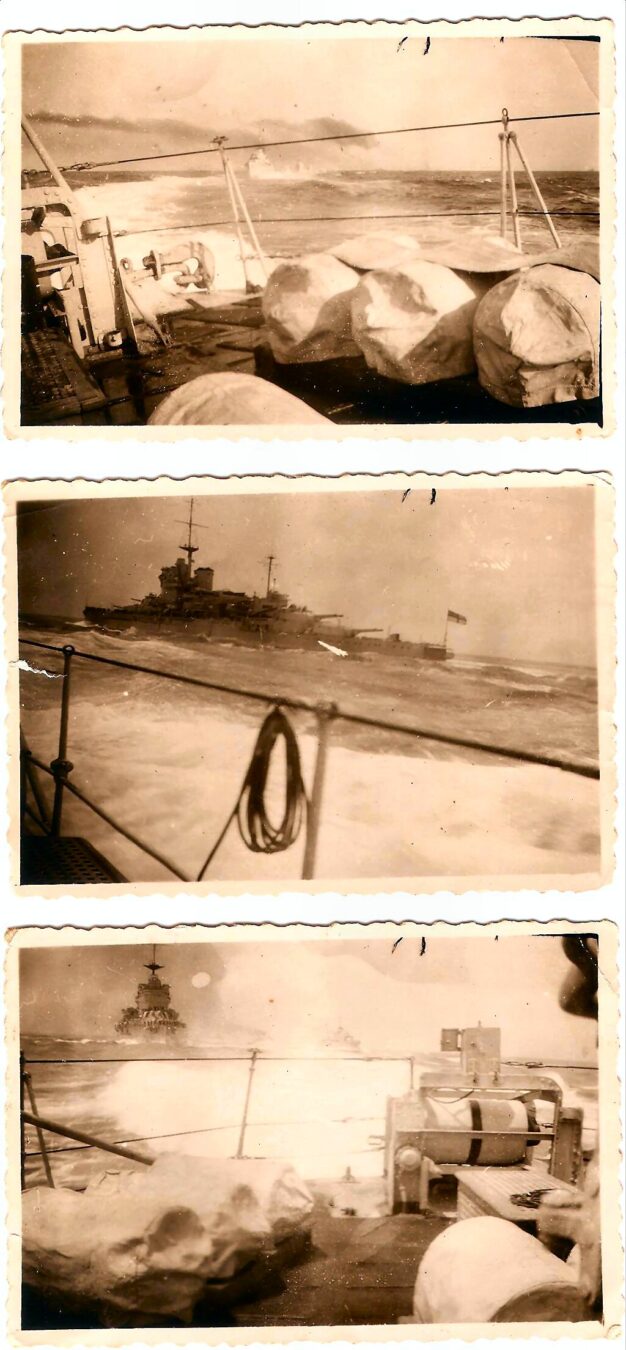
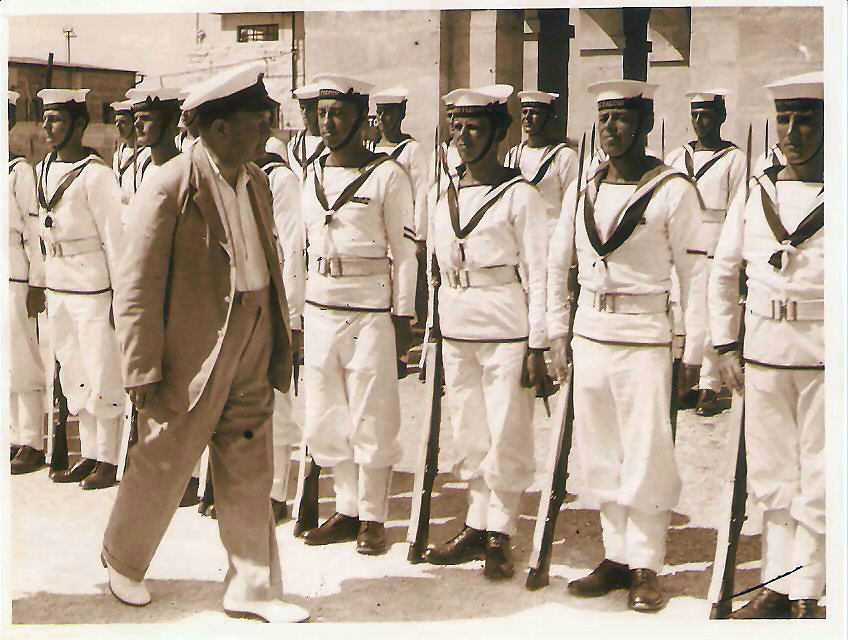
At the end of this course I was appointed as Acting Sub Lieutenant to H.M.S. Cossack, a Tribal Class Destroyer and joined at Dartmouth on 16th May 1941. Duly arriving by train in Dartmouth in the afternoon I was informed that the ship would arrive sometime that evening, so I sat on the jetty, with my bag and ‘ammick’ to wait for her. I didn't really know what I was expecting; I remembered hearing about 'Vian of the Cossack' and some connection with the Altmark affair back in 1940 but my knowledge was limited by my cruising in small or large circles round the South Atlantic in H.M.S. Cumberland since the war started.
The ship came in alongside, almost opposite where I was sitting and I made my way onboard. By the Officer of the Watch I was handed on to the First Lieutenant, Lieutenant Bill Rose, who said that as it was nearly supper time I'd better make myself at home and see the Captain in the morning. My cabin was small but pleasant, below the upper deck aft and whereas up to this point at sea I'd always slept in a hammock, here was a bunk of my very own. The next morning I was wheeled in to meet the skipper, Captain Philip Vian, a fearsome man if ever there was one, yet the entire ship's company would have gone through hell fire with him. I started off with a rocket: “When did you arrive onboard? Last evening, Sir; Why didn't I see you then?" At that point I handed over the answers to the First Lieutenant. Anyway thereafter we got on quite well together, one very new Acting Sub Lieutenant and one very fiery four ring Captain. Cossack was Captain (D) of the 4th Destroyer Flotilla, eight ships though most of the time we were just four ships working together, Cossack, Sikh, Zulu, Maori and occasionally the Polish destroyer Piorun. As we were (D) we had onboard something like 10 Lieutenants including the extra Flotilla staff but only one Sub Lieutenant (me). We all had quite a full life for the five months I was in the ship, taking part in a number of UK to Gibraltar convoys, two Gibraltar to Malta convoys, a bombardment of the Island of Sardinia, the sinking of the German battleship Bismarck and finally our own sinking. All these events have been written about many times so I won't add yet another version of these stories except that when we were quite close, between 4000 and 6000 yards, two to three miles, to the Bismarck carrying out a torpedo attack, jet black night and a violent sea running, a 15 inch shell from her shot away our wireless aerials. I have first hand knowledge of this because my Action Station was at the after end of the Bridge in charge of searchlight and starshell. These aerials could not have been much more that 10 feet above my head and if you have a 15 inch shell whizzing past your head about 10 feet away you are fully aware of it. Bismarck was finally sunk by a salvo of torpedoes from the cruiser Dorsetshire, a ship similar to the Cumberland that I was in before as a midshipman.
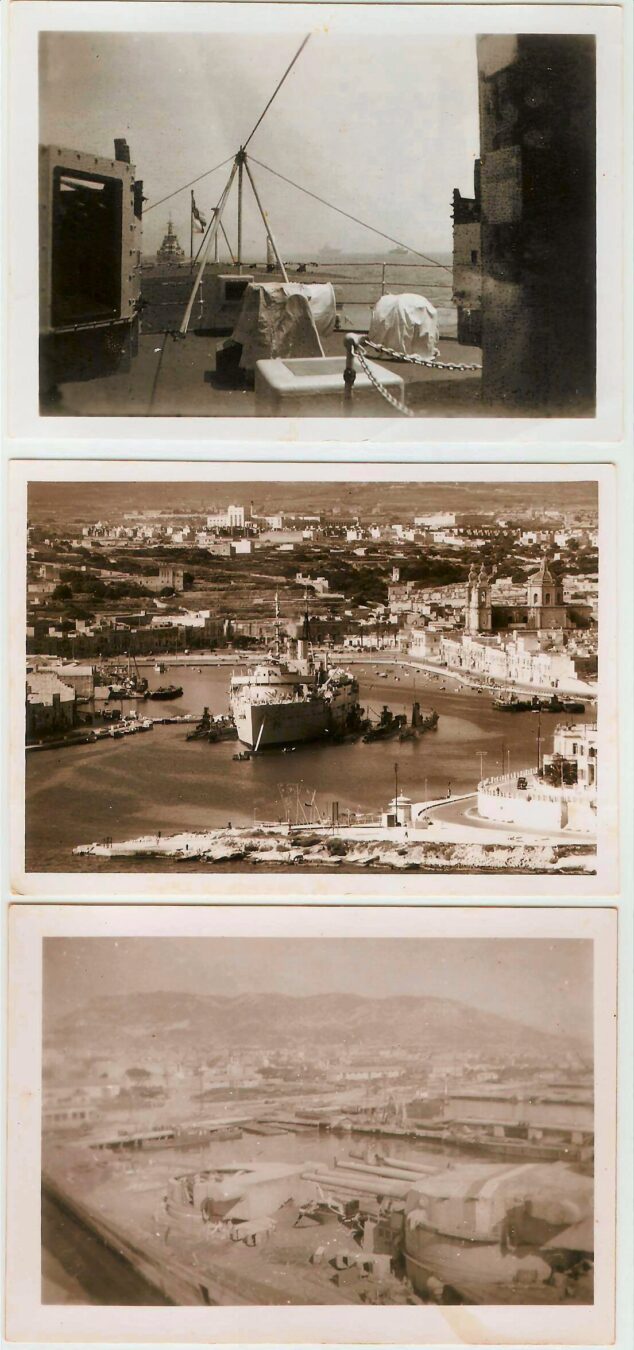
This episode was followed by two convoys to Malta code named Operations Substance and Halberd, both ‘hairy affairs’. The passage from Gibraltar to Malta, rather over 1000 miles, was at Action Stations practically the whole time. For almost all the voyage the convoy and escort were attacked in the daytime by dive bombers from Sicily and, particularly at night, by 'E' boats, German or Italian Motor Torpedo Boats, from the island of Pantalleria.
After all these fun and games, Captain Vian was promoted Rear Admiral and was relieved of his command. Captain E L Berthon DSC took over as Captain (D) of the 4th Destroyer Flotilla and as Commanding Officer of Cossack.
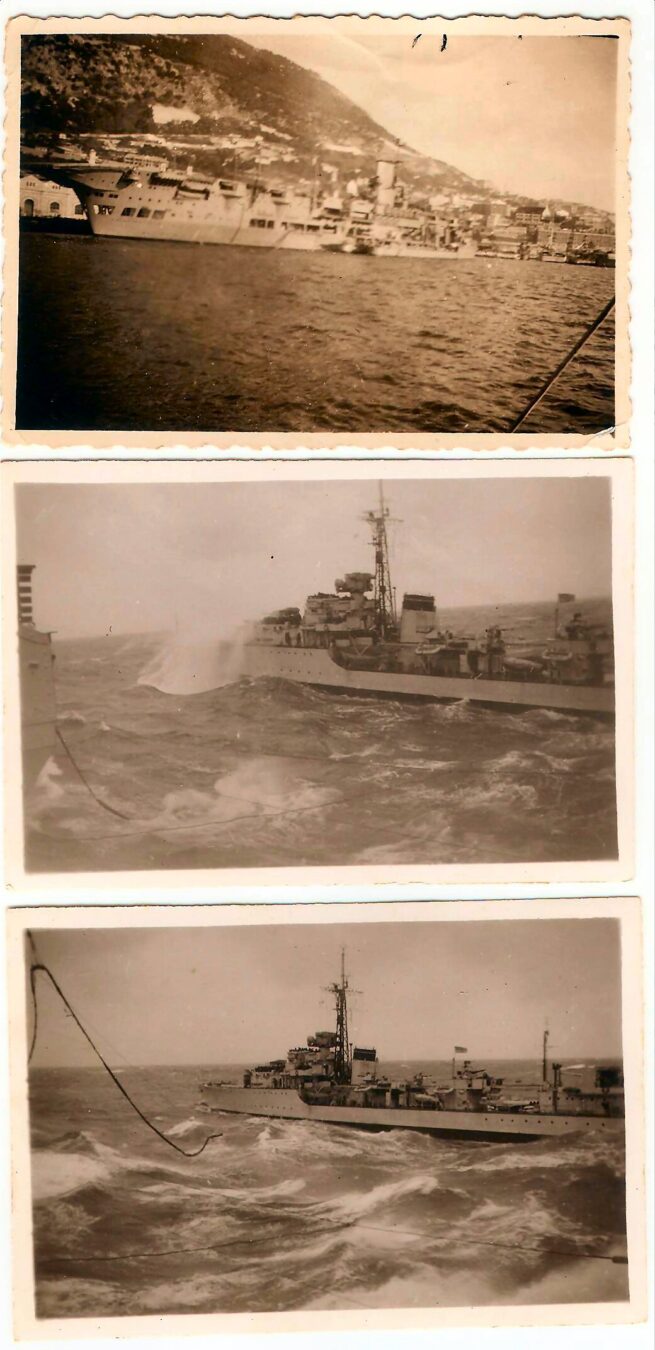
We are now in October 1941 and we sailed from Gibraltar about teatime on the 22nd. The previous evening we had been berthed alongside H.M.S Legion, a ‘L’ class destroyer slightly more modern than us. I have an account of the sinking of Cossack from the Navigating Officer of Legion, a young Lieutenant B G O'Neill, later Cdr OBE RN Retd, and I quote his words. "The night before sailing from Gibraltar (21st October) the wardrooms of Cossack and Legion had a convivial party together in Cossack under the overall direction of Lieutenant Bill Rose (No.1 of Cossack) a remarkably charming and competent officer. It was Trafalgar Night so we drank a toast to the Immortal Memory of Lord Nelson and got to know one another. This was only too poignant as little did we know that two nights later we would be picking up survivors among the very heavy casualties Cossack suffered."
I was at my usual place for Special Sea Dutymen on leaving harbour as Officer of the Watch on the bridge. This is the last I remember for twelve days and the rest of this story is all hearsay, second or third hand. We joined a slow convoy back to the UK (HG75) as escort with Legion and a number of corvettes, and I understand that at 2337 hours or so on the 23rd we were torpedoed for'ard of the bridge by the German submarine U563. We had been at Action Stations and had just stood down to two watch Defence Stations. Both for’ard 4.7 inch magazines for 'A' and ‘B’ turrets blew up together with the small arms magazine. We lost most of the personnel on the bridge, ‘A’ and ‘B’ guns crews and everyone for'ard on the upper deck and below. 158 including the Captain and 4 officers out of a total of about 250 complement.
I was still at my Action Station at the after end of the bridge. Very fortunately I was thrown aft, not for'ard into the fire, nor to port or starboard overboard, but down on to the upper deck, Realising that the ship would very likely sink, the order was given to abandon ship and this was duly carried out, everyone for himself. I apparently was left lying on a red hot deck by the break of the foc's'le port side. As the ship did not sink for another two days, a party came back on board early in the morning of the 24th and found me lying where I was, I'm told very close to the new waterline where the ship was bows down. By this time the entire foc's'le, from the bridge forward, had dropped off and the ship was kept afloat by the engine and boiler room bulkheads.
I was picked up unconscious; maybe someone in the rescue party tripped over me and I said ‘ouch’ or perhaps a much stronger word, and suffering from a broken leg presumably when I had taken off from my position on the bridge, a fractured skull and concussion probably when I landed on the upper deck, and multiple burns from lying on a red hot deck for some while. I was a lucky fellow. I was transferred to the Legion for some days, helping amongst many other wounded to make a real mess of their nice blue Wardroom carpet. The Wardroom became the Sick Bay and I gather we were all laid out in rows round the deck. I believe this carpet eventually went to the bottom of the ocean when Legion was sunk later in Malta Dockyard in March 1942. I would like to put on record my sincere thanks and congratulations to the young Doctor of Legion, Surgeon Lieutenant E James RNVR and his small sick bay staff who coped with us all and looked after us so well.
We had about five days at sea before Legion was able to return to Gibraltar when I and many others were transferred to the RN Hospital there. I must have woken up after arriving in Gibraltar because I remember being in a Neil Robertson stretcher and being hauled up from a boat on to the jetty. Obviously I was lashed in the stretcher very tightly and I came to with a severe pain in my back, probably only a minute or less but I remember it. After that again a complete blank. Though I have 12 days complete loss of memory, I still have my wound certificate which I signed, rather shakily, on 3rd November 1941. I spent 2 months in RNH Gibraltar then was brought home in the fast minelayer Manxman in the company of Paymaster Lieutenant Geoffrey Craven DSC RNVR. He had been awarded his DSC as a German linguist as part of the Altmark boarding party in 1940 and was now suffering from a wound to his foot after we were torpedoed. We were now to spend a further two months in Barrow Gurney Hospital near Bristol. This for me was followed by one month’s sick leave and then three months shore service spent at RN Camp, Glenholt, a former Butlin’s Holiday camp near Plymouth. I must have been slightly crazy for while at Glenholt I volunteered for service in submarines. Presumably I thought I could get my own back at THEM.
Documents:
Gallery:
Day, William
Rank: Boy Seaman Ordinary Seaman
De Pass, Daniel. ‘hard over Danny’
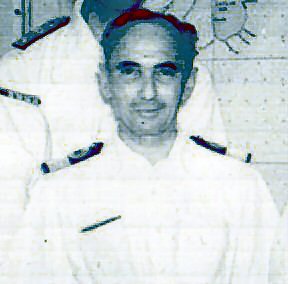
When Allotted: 28 December 1937
Remarks: Captain
28 December 1937 – 28 December 1939
(Incurred their Lordships Displeasure for the collision with SS Borthwick 7.11.39) (Superseded by Captain R. St. V. Sherbrook VC).
Before acceptance from the builders the ship sailed down the Tyne to the North Sea where the ship builders transferred to a tug. De Pass then ordered ‘Full Steam Ahead’ As the engines had not been run in serious damage was caused to the engines and L03 had to return for repairs.
15 October 1911 Sub Lt
15 October 1913 Lt
15 October 1921 Lt Cmdr
31 December 1926 Cdr
31 December 1934 Captain
Retired 8 January 1944
Dewar, J
Rank: W/Man
Remarks: Survivor discharged to HMS Victory taking passage in HMS Rodney)
Dibben, G.W
When Allotted: October 1939