Year by Year
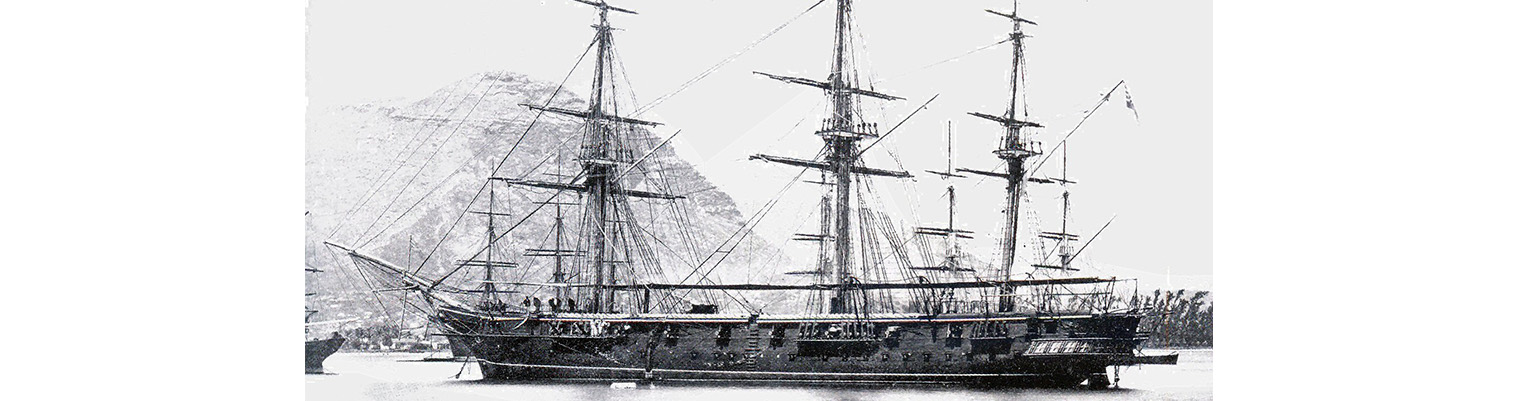
Discover the history of the HMS Cossack from 1854 to 1875.
You can search the ‘year’ and ‘month’ to find a specific date and also ‘click’ on the date itself to reveal any images and moments from that date.
06 November 1871
Anchored off St Pauls Islands – at single anchor. Wind north westerly force 4 becoming NNW force 4. Barometer 30.36 inches. Maximum temperature 59F.
0415. Made sail.
0445. Sighted the island of St Paul bearing SW. Trimmed sails. Shaped course SSW. Shortened sail and came to in 20 fathoms abreast of Crater Lake with broken bottom and veered to 76 fathoms. Anchorage bearings. Ninepin Rock N55W magnetic. Hutchinson’s Point S15W magnetic.
The after part of the wreck of MEGARA is still to be seen right on the bar with the four boilers awash in about 1 to 2 fathoms of water outside but nothing could be seen of the rest of the hull having fallen in to the deep water of the Crater lake on the bar. Ballast cables etc were never seen. The two Frenchmen of the island hoisted French Colours. They say that on the same day the men left in the MEGARA a gale from the SE drove her u further and also parted on the 6 September. Captain and officials landed and found great quantities of stores of all descriptions. Took shore observations for errors of chronometers and found they had kept their old rates from the Cape notwithstanding the cold weather. Lowered the screw.
10 November 1871
Wind northerly force 3 becoming north force 3. As the 10th. Dismantling tents.
1900. In boom boats.
There appeared to be no fresh water on the island except from the place used by the MEGARA which is on the summit of the hill a short distance from the huts. Fish were caught in great quantities in both anchorages but nothing was to be had from the island in the way of vegetables etc. Kelp grows very quickly within 2 or 3 cables from the shore. The water is very clear and the bottom dark sand. A SW wind seldom happens but when it does it blows very heavily for a day or two, shifting to the NW it will blow with equal force until it settles into fine weather.
24 November 1871
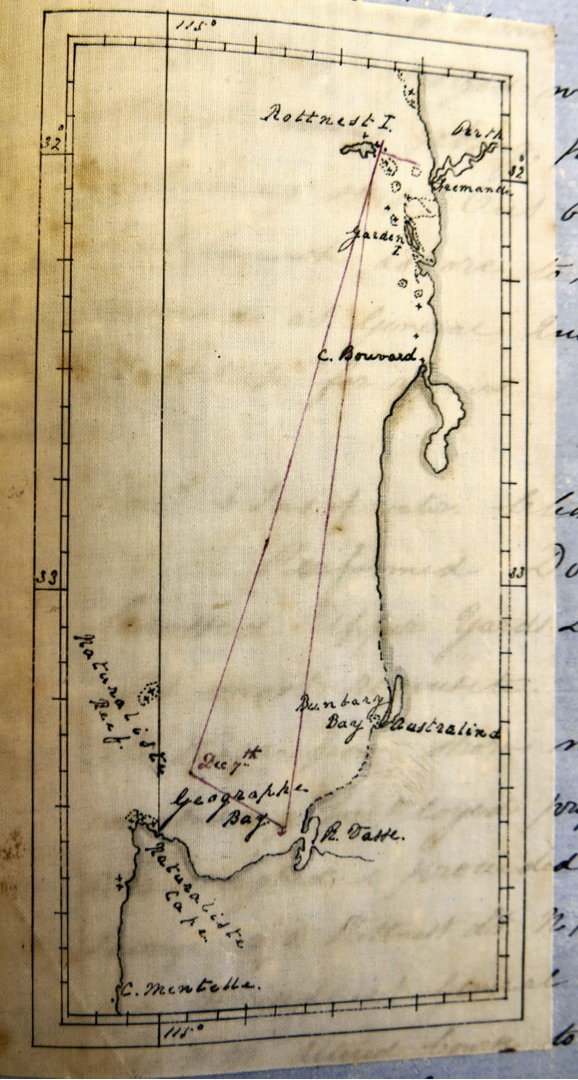
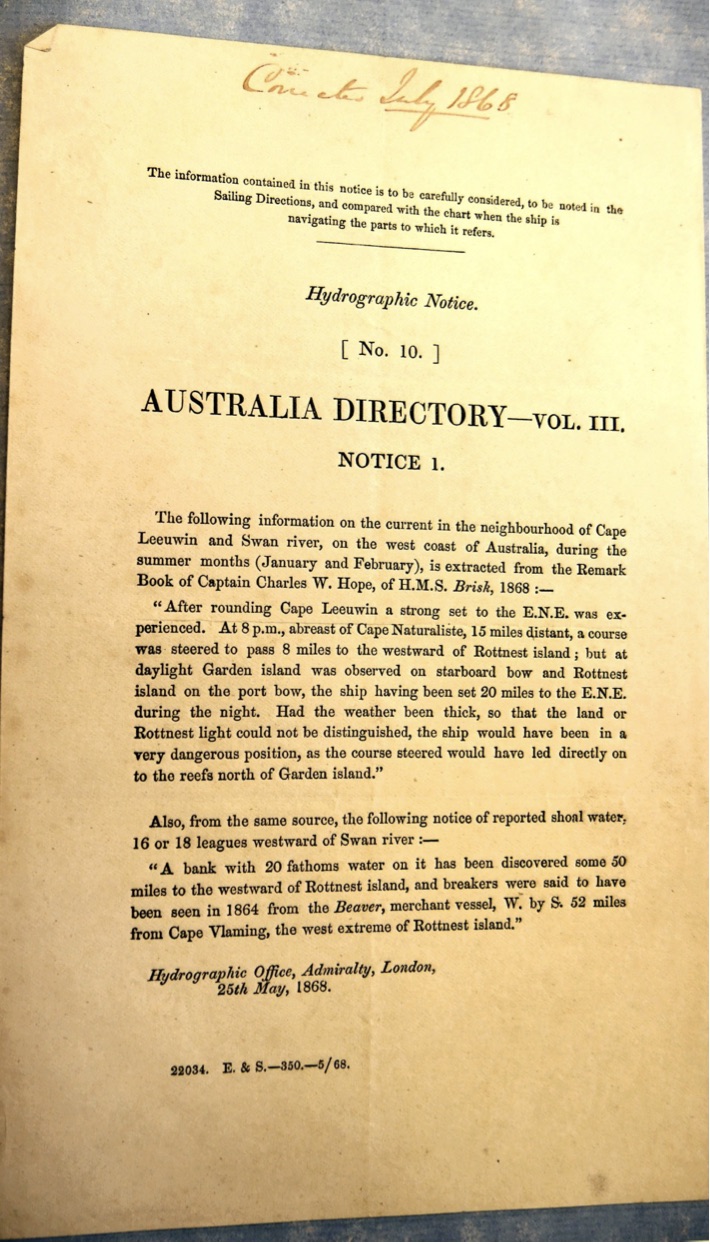
Latitude 32.30S. Longitude 114.54E. Course N52E. wind SW by W force 6 becoming south westerly force 5. Under sail. Maximum temperature 62F.
0235. Lowered Top gallant sails to a squall from WSW to WNW. Strong SW wind. Squally weather and showery.
Noon Course NE by E.
1600. Observed land NE by E.
1630 light House Rottnest Island ENE.
1800. Duck Rock S82E. pilot met us halfway but did not take him onboard .
1950. Came to in Gage Road in 5 ½ fathoms with sandy bottom and veered to 6 shackles. Anchorage bearings. Arthurs Head Light House S30E. Menstan (?) Rock S69W.
Remarks
We have made a tolerable quick passage having 40 days including 5 at anchor of St Pauls and if it had not been for us calling there we should most probably have done it in 30 days as the wind were stronger to the south in latitude 40 and 39. For in general in edging up for St Pauls the wind fell lighter. On leaving the Cape we had easterly winds with overcast cloudy squally weather until the 5th day from port when we fell in with the westerly winds in latitude 41S. Longitude 25.41 E with a long heavy swell. On leaving St Pauls we has north easterly breezes for 3 or 4 days and stood south to latitude 39.20S. Longitude 87.24E where the wind came from SE and southward gradually hauling round to the westward by which we reached Fremantle, the wind shifting to the south westward within 100 nautical miles from the land where we met with a heavy swell. Then we experienced the whole breeze. Currents have very irregular with the exception of 3 days easterly set after leaving St Pauls of about 12 miles a day.